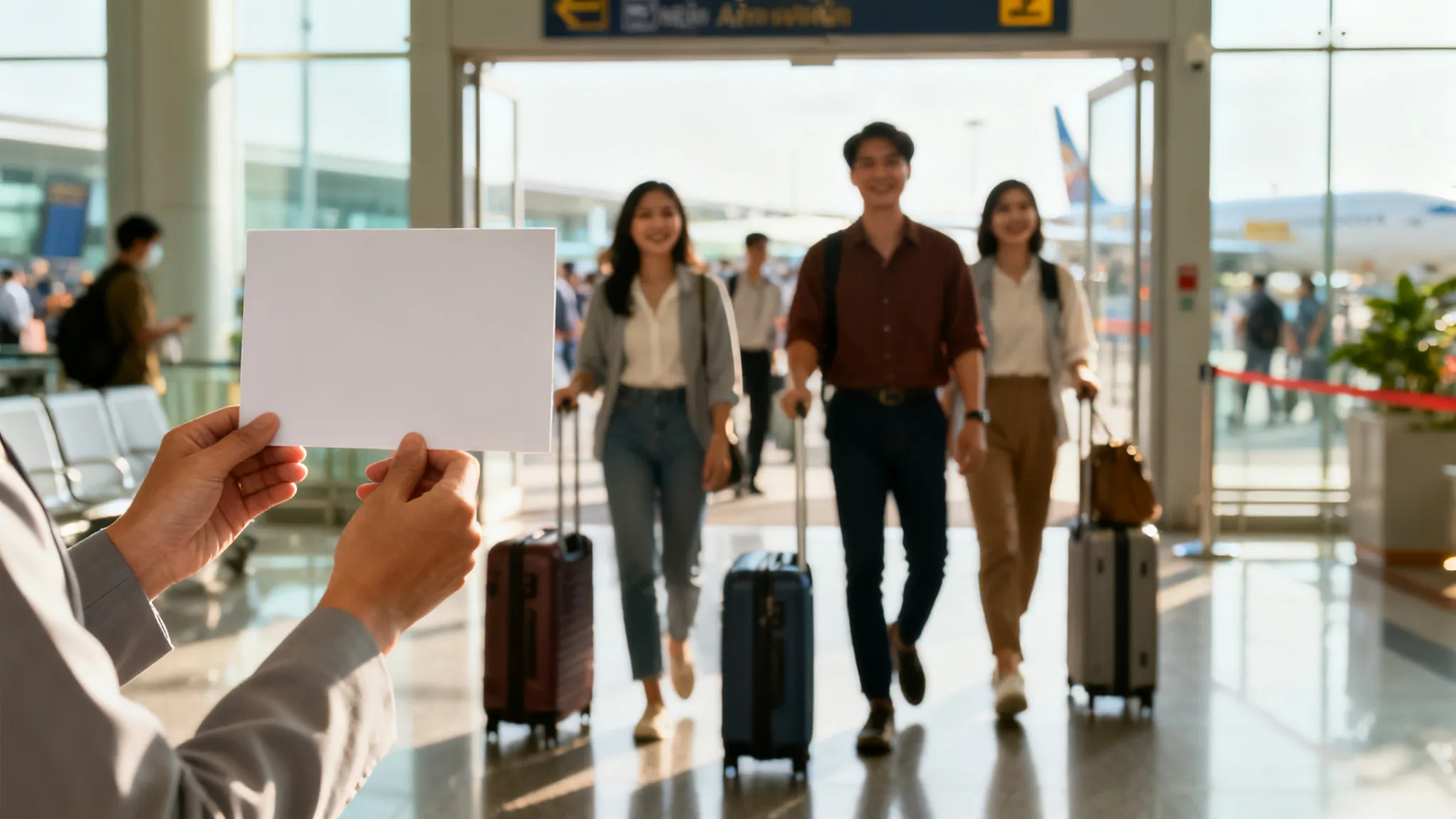
Group & Corporate (MICE) Arrivals: Coordinating Many Passengers at the Airport
Coordinating a group or MICE arrival is a logistics exercise, not a single pickup. Here is how to plan manifests, meeting points, immigration flow and transfers at SGN, CXR and PQC.
· 6 min read
A group arrival is a different animal from a solo one. When forty delegates land across three flights, with checked bags, visa questions and a coach waiting outside, the airport stops being a corridor and becomes a small operation. The difference between a smooth arrival and a chaotic one is almost never luck — it is preparation done before anyone boards.
This guide covers the practical mechanics of moving groups and corporate (MICE) passengers through Tan Son Nhat (SGN), Cam Ranh (CXR) and Phu Quoc (PQC), from the manifest you build weeks ahead to the moment the last delegate is on the bus.
Start with a manifest, not a headcount
A headcount tells you how many people to expect. A manifest tells you how to handle them. Build one spreadsheet with, for each passenger:
- Full name exactly as it appears in the passport
- Passport nationality and number (kept securely, shared only with those who need it)
- Flight number, scheduled arrival time and origin
- Visa status: e-visa approved, visa on arrival pre-approved, or exempt — and remind travellers to verify their own eligibility at https://evisa.gov.vn
- Checked baggage count
- Group sub-cluster (which coach, which hotel, which breakout team)
- Any mobility, medical or language needs
This last column is where groups most often get caught out. One delegate in a wheelchair, or one who only speaks Mandarin, changes the shape of the arrival. Better to know at the planning stage than at the immigration hall.
Split the manifest by flight, then by cluster
If your group arrives on four flights spread over two hours, treat each flight as its own mini-arrival with its own greeter and its own handover. Trying to hold everyone in one place until the last flight lands creates a crowded, tired group and a coach idling in a queue. Let early arrivals go ahead to the hotel and send the last flight separately.
Choose one clear meeting point per terminal
Groups scatter the moment they exit the aerobridge — duty free, restrooms, currency exchange. The single most useful thing you can do is give every passenger the same written instruction: a named meeting point, described in plain language, not a gate number.
For arrival coordination, the practical meeting point is usually before the immigration hall, where a greeter with a name sign can collect the group before they split into separate queues. For departures, it is the check-in row. Write it into the final travel document, along with a local contact number.
Use name signs, not group numbers
A sign reading "TOUR 47" is invisible in a crowd. A sign with the group leader's surname and the delegation name is not. If several greeters are involved, give each one a distinct sign so passengers know exactly who to approach.
Plan the immigration flow as a group, but process as individuals
Immigration is always processed person by person — there is no group counter. What you can control is how people reach the desk: prepared documents, a clear sense of which lane to use, and someone nearby to answer questions.
Brief delegates before departure on three points:
- Keep the passport, boarding pass and visa approval in hand, not in the checked bag.
- Remove hats and look at the camera at the desk; answer questions directly.
- If something is wrong with a visa, stay calm and step aside with the greeter rather than holding the queue.
Where the airport provides priority lanes, a fast track service can make the process smoother for a group by guiding passengers to the right lane and helping at the desk. It cannot guarantee clearance or a specific waiting time — immigration decisions rest with the authorities.
Baggage is where group timings break
No part of a group arrival is less predictable than the baggage belt. Thirty passengers may produce sixty bags, and the last one can arrive well after the first. Plan for it:
- Assign one coordinator to stay at the belt until the final bag is claimed.
- Count bags against the manifest before leaving the hall — a missing bag discovered at the hotel is far harder to resolve.
- Send passengers who travel carry-on only ahead to the coach, with a clear instruction on where to wait.
- Keep the coach booking flexible by 30–45 minutes rather than committing to a tight slot.
For a delegation arriving at Tan Son Nhat, where the arrivals area is busy for much of the day, this buffer matters more than at the smaller regional airports.
Separate the transfer from the terminal
A group of forty does not fit into one vehicle, and a convoy of cars is harder to manage than a coach. Decide early:
- Coach plus escort: one large vehicle, one coordinator on board, luggage loaded by tag colour or cluster.
- Split by hotel: two or three smaller vehicles, each with its own manifest page and a named lead passenger.
- VIP sub-group: speakers, executives or sponsors travelling separately, with a private airport transfer and a direct handover at the kerb.
Whichever model you choose, confirm the pickup point in writing and share a photo of it with the group leader. Kerbside rules at Vietnamese airports are enforced, and a coach that cannot stop where you planned will cost you twenty minutes.
Stagger the departures too
Outbound MICE movements are just as demanding. Groups tend to arrive at the terminal in one wave, which creates a check-in bottleneck. Split the group into two or three check-in windows by cluster, and brief everyone on the security process in advance. A VIP departure service can help move sub-groups through check-in and to the gate with guidance, though security and border formalities remain the airport's responsibility.
Airport-specific notes
- SGN (Ho Chi Minh City): the busiest of the three and the most common entry point for corporate groups. Allow generous time between landing and coach departure, and confirm which terminal each flight uses before printing documents.
- CXR (Nha Trang – Cam Ranh): a compact airport serving Nha Trang. Transfer times to the city are longer than the airport itself suggests, so build the drive into the programme rather than treating it as a footnote.
- PQC (Phu Quoc): popular for incentive trips. Arrivals can cluster around resort check-in times, so stagger transfers by cluster rather than sending everyone at once.
A short pre-arrival checklist
- Manifest complete, with visa status and special needs confirmed for every passenger
- One written meeting point per terminal, in plain language, sent to all delegates
- Name signs prepared for each greeter, with a local contact number on every document
- Baggage count plan agreed, and one coordinator assigned to the belt
- Transfer plan split by cluster, with confirmed pickup points and a photo of each
- Buffer built into coach bookings, and departure check-in windows staggered
- Delegates reminded to verify visa and document requirements at https://evisa.gov.vn
Where FastTrackVNS fits in
For groups landing at SGN, CXR or PQC, FastTrackVNS provides meet and greet, fast track assistance through arrival or departure formalities using priority lanes where available, baggage help and private transfers — coordinated across multiple flights and sub-groups. Prices start from $40 per person, with no prepayment: your assistant meets you with a name sign and you pay when you meet. Send the manifest through the booking form or WhatsApp at +84964444093, ideally at least 48 hours before the first flight, with up to 20 passengers per online request. For larger delegations, message first so the arrival can be planned properly.