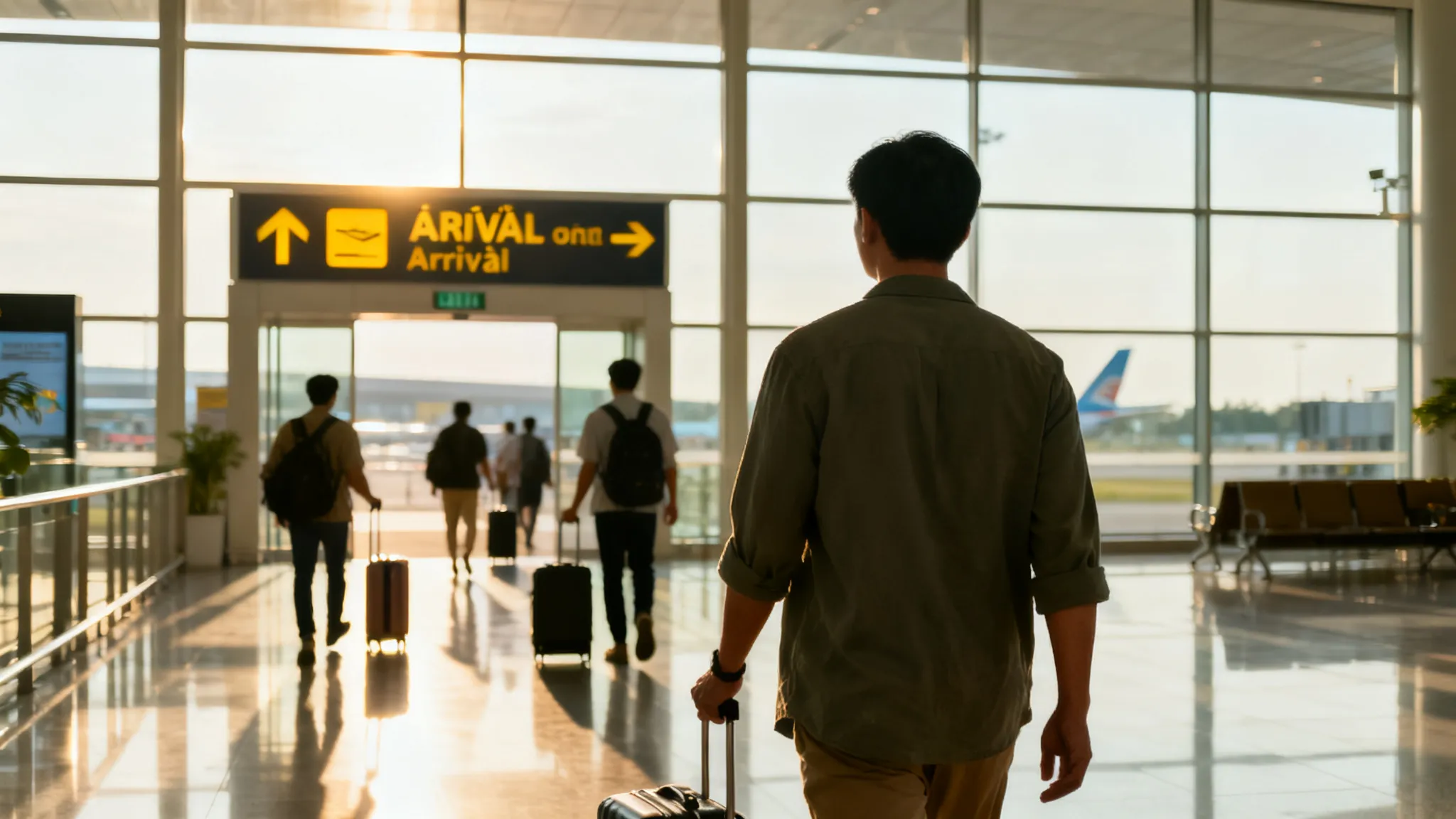
Noi Bai Airport (HAN) International Arrivals: Hanoi Guide
Landing at Hanoi's Noi Bai Airport? Here is a calm, practical walkthrough of international arrivals — from the aerobridge to immigration, baggage, transport and the ride into the city.
· 5 min read
Landing at Noi Bai International Airport (HAN) is the first real taste of Vietnam for many travellers heading to Hanoi. The airport itself is manageable, but the arrivals flow involves a few steps that are much easier when you know them in advance. This guide walks you from the aircraft door to your hotel door, in order, with the practical details that actually matter.
Before You Land: The Things Worth Preparing
Most of the friction at any Vietnamese airport is created before the flight, not at it. A little preparation removes most of it.
- Check your visa situation in advance. Whether you need an e-visa, a visa on arrival approval letter or nothing at all depends on your nationality and length of stay. Rules change, so verify with official sources such as evisa.gov.vn rather than relying on forum posts.
- Have your documents in one place. Passport, visa or approval letter, onward ticket and hotel address should be in a single folder or pocket you can reach without opening a suitcase.
- Keep a pen handy. Arrival forms and immigration cards are easier to complete before you reach the counter.
- Note your hotel address in Vietnamese. Drivers and staff will find it faster, and it avoids pronunciation guesswork.
If you want a deeper document checklist, our guide on Vietnam e-visa and documents to prepare before you land covers it in detail.
Step 1: Off the Plane and Into the Terminal
Noi Bai's international terminal handles arrivals on a single flow: you leave the aircraft, walk through the aerobridge or down stairs to the apron bus (depending on where your flight parks), and follow signs for Arrivals / Immigration.
The walk is generally straightforward and signposted in English alongside Vietnamese. Washrooms are available before immigration, and it is worth using them here rather than queuing later. If you are travelling with young children or older parents, take this stretch slowly — there is no benefit to rushing to a queue.
Step 2: Immigration and Passport Control
This is the step that shapes your first hour in Hanoi.
- Join the foreign passport queue. Signs direct you clearly; do not join the Vietnamese citizen lanes.
- Hand over your passport, visa or e-visa printout, and any required arrival card.
- Answer briefly if the officer asks about your purpose or length of stay.
- Collect your passport with the entry stamp and check the date is correct before stepping away.
Where the airport provides priority lanes, some travellers use a fast track service to move through formalities with guidance rather than alone. It does not replace immigration checks or guarantee clearance — it simply makes the process smoother, which matters most on late arrivals, with children, or when several long-haul flights land together. For context on how this compares with the regular lane, see Fast Track vs regular immigration at Vietnam airports.
Step 3: Baggage Reclaim
After immigration, follow signs to the baggage hall. Screens above each belt show flight numbers, so confirm yours before settling in.
- Trolleys are available in the hall at no charge.
- Oversized items such as strollers, golf bags or surfboards usually arrive through a separate oversized belt — look for the sign rather than waiting at the carousel.
- Check the belt before leaving. Tags and similar-looking black suitcases cause most mix-ups.
- If a bag is missing, go to your airline's baggage service desk inside the hall before exiting customs. It is far harder to resolve once you are landside.
Step 4: Customs and Exit
After baggage, you pass through customs. Most travellers with nothing to declare join the green channel; if you are carrying goods that require declaration, use the red channel and ask staff. Duty-free allowances and restricted items change, so check official guidance rather than guessing.
Beyond customs is the public arrivals area — the point where you are officially landside and where drivers, meet-and-greet staff and transport counters are waiting.
Step 5: Getting From Noi Bai Into Hanoi
Noi Bai sits roughly 30–40 km from central Hanoi, and traffic makes journey times variable. Your main options:
- Airport taxi. Use the official taxi ranks outside the terminal rather than accepting offers from people approaching you inside the building. Confirm the meter or agree the fare before departure.
- Ride-hailing apps. Pickup points are signposted; follow the app's instructions to the designated area rather than the general kerb.
- Airport buses. A low-cost option running to central Hanoi, useful if you are travelling light and not in a hurry.
- Private transfer. A pre-booked car with a driver waiting at arrivals removes the negotiation step entirely — particularly welcome after a long flight or a late landing. Our private airport transfer service covers HAN among five Vietnamese airports.
Whichever you choose, ignore unsolicited offers of rides inside the terminal. Agree the arrangement before you get in, and keep your hotel address visible.
Step 6: Practical Extras Before You Leave
- SIM cards and currency are available in the arrivals area; compare a couple of counters rather than taking the first offer.
- Cash machines are nearby, but having a small amount of Vietnamese dong arranged beforehand saves time.
- Meeting points matter if you are being collected — agree on a specific spot, such as a named gate or café, and share your flight number with your driver.
A Smoother Arrival, If You Want One
Most travellers manage Noi Bai perfectly well independently. But if you are landing late, travelling with children or elderly parents, or simply want to skip the guesswork, FastTrackVNS offers arrival assistance at Noi Bai and four other Vietnamese airports only — SGN, HAN, DAD, CXR and PQC. A named assistant meets you with a sign, guides you through immigration and baggage, and can hand you over to a driver. Packages range from a simple meet and greet to a VIP arrival with a private waiting area and passport lane where available. Prices start from $40 per person, there is no prepayment — you pay when you meet — and booking is recommended at least 48 hours before your flight, with up to 20 passengers per online request. You can request a booking online or via WhatsApp.
Quick Arrival Checklist
- Visa checked on an official source and printed
- Passport, approval letter and hotel address in one accessible place
- Pen ready for arrival forms
- Washroom stop before immigration
- Foreign passport lane, stamp date verified
- Trolley collected, oversized belt checked, bag tags matched
- Green or red customs channel chosen correctly
- Official taxi rank or pre-booked driver, no unsolicited offers
- SIM and cash sorted before leaving the terminal
Take it in order, allow a little patience at immigration, and Noi Bai becomes a straightforward first chapter to your time in Hanoi.