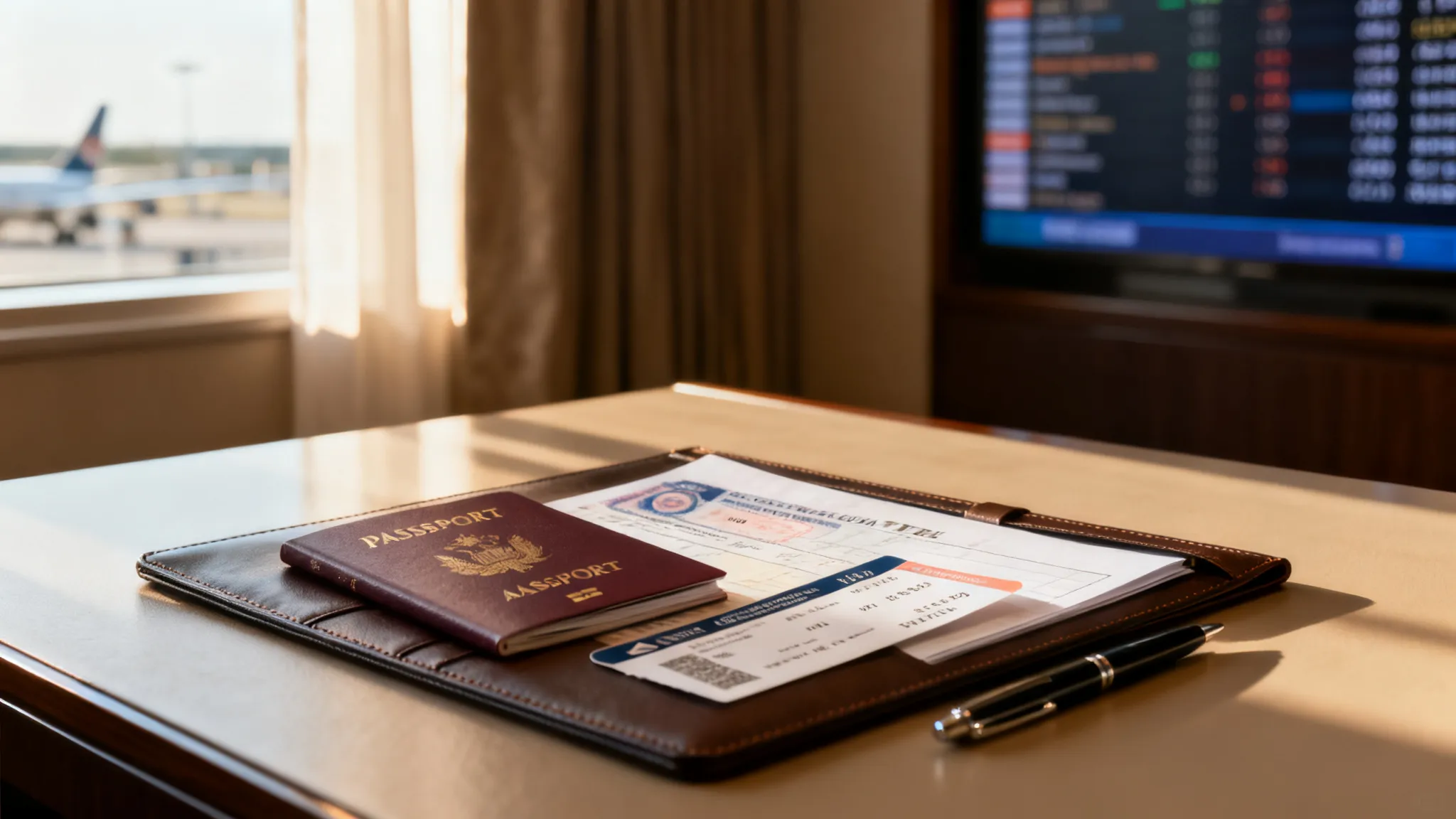
Vietnam E-Visa & Documents: Prepare Before You Land
A calm, practical guide to preparing your Vietnam e-visa and arrival paperwork before you fly — what to apply for, what to print, and what to keep in your hand luggage for SGN, CXR and PQC.
· 5 min read
Landing in Vietnam feels a lot calmer when the paperwork is already done. The e-visa itself is only one piece of the puzzle: the way you print it, the details you match to your passport, and the documents you keep within reach all shape how quickly you move through the airport. This guide walks through what to prepare before you board, so that arrival is a formality rather than a scramble.
Start With the E-Visa, Not the Flight
The Vietnamese e-visa is an online application, and the only place to apply is the official government portal at https://evisa.gov.vn. Treat any other website asking for payment or passport scans with caution — the official site is the source of truth for eligibility, current requirements and processing times.
A few habits make the application smoother:
- Apply well before your departure date. Processing is not instant, and peak periods can slow things down.
- Enter your name, passport number, date of birth and passport expiry exactly as they appear in your passport, including middle names.
- Upload a clear passport-style photo and a scan of your passport data page that is sharp, well-lit and uncropped.
- Double-check your intended arrival date and the port of entry you select. If your plans change, the e-visa may no longer match your flight.
- Save the confirmation email and download the PDF as soon as it arrives. Do not rely on finding it in your inbox weeks later.
If you are unsure whether you need a visa at all, check the official portal rather than a forum — visa exemption rules change, and the government site is the only reliable reference.
Print It, Then Print It Again
Vietnam's e-visa is an electronic document, but airports still live in a world of paper. Print at least two copies: one for your hand luggage and one for your checked bag. Save a PDF to your phone as a backup, but do not assume you will have data or battery when you reach the immigration hall.
Keep the printout clean and unfolded. A crumpled, faint printout can slow down the officer checking it, and a phone screenshot with a cracked screen is worse.
What Else Belongs in the Same Folder
- Passport, valid for at least six months beyond your intended stay, with blank pages.
- Your e-visa printout, plus a digital copy.
- Return or onward ticket, printed or saved offline.
- Hotel booking or address of your first stay, including the district.
- Travel insurance details, if you have them.
- Any onward domestic flight booking, especially if you are connecting to Nha Trang or Phu Quoc.
You will not always be asked for all of these, but having them together means you are never the person unpacking a suitcase at the counter.
Match Your Details Before You Fly
The most common delay at immigration is not a missing document — it is a mismatch. Your e-visa name, passport number and date of birth must match your passport exactly. Check this the day the e-visa arrives, not at the airport.
If you have a connecting flight, confirm that your arrival airport is one your e-visa lists as a valid entry point. Vietnam's international gateways include Tan Son Nhat in Ho Chi Minh City, Cam Ranh near Nha Trang and Phu Quoc. If your itinerary lands somewhere else, your paperwork needs to reflect that.
Know Your Arrival Airport
Each airport has its own rhythm, and knowing it in advance removes a layer of stress.
Tan Son Nhat (SGN), Ho Chi Minh City
Vietnam's busiest airport, with separate domestic and international terminals. Arrivals can be crowded at peak hours, and the walk from the gate to immigration is longer than many travellers expect. Have your e-visa printout and passport in hand before you join the queue. If you want a step-by-step picture of the process, our Tan Son Nhat arrivals guide covers it in detail.
Cam Ranh (CXR), Nha Trang
A smaller, calmer airport serving Nha Trang and the surrounding coast. Immigration is usually straightforward, but the drive into Nha Trang is a separate planning task — our guide to Cam Ranh Airport to Nha Trang explains the transfer options.
Phu Quoc (PQC)
A resort island airport with a compact international arrival area. It is easy to navigate, but transfers to hotels can be longer than the flight itself. Our Phu Quoc arrival guide walks through immigration and transfers.
Keep the Essentials Within Reach
Before you land, move the following into a single pouch or the front pocket of your bag:
- Passport and e-visa printout.
- Pen, for any arrival form that may still be handed out.
- Hotel address and phone number, written down.
- Onward ticket and travel insurance details.
- A small amount of local currency or a card for immediate expenses.
Do not bury these in a checked bag. You will need them before you reach the baggage belt.
What Assistance Can and Cannot Do
Airport assistance services can make arrival smoother by guiding you to the right counters, helping with paperwork and escorting you through the terminal. They use priority lanes where the airport provides them. They cannot guarantee immigration clearance, skip a queue entirely, or promise a specific waiting time — those decisions belong to airport and immigration authorities.
If you would like a named welcome and guidance through the terminal, FastTrackVNS offers meet and greet, fast track and VIP arrival options at Tan Son Nhat, Cam Ranh and Phu Quoc only. Packages range from a simple meet-and-greet through to aerobridge welcome and private passport lanes, and prices start from $35 per person. You can request a booking through the booking form or WhatsApp at +84964444093, ideally at least 48 hours before your flight, with up to 20 passengers per online request. There is no prepayment — you pay when you meet your assistant.
A Pre-Flight Checklist
Run through this the night before you fly:
- E-visa approved, printed twice, and saved offline.
- Passport valid, with blank pages, and details matching the e-visa.
- Return ticket, hotel address and insurance details in one folder.
- Airport arrival plan: which terminal, how you will get to your hotel.
- Assistance or transfer booked, if you want it, with the flight number confirmed.
- Phone charged, with a screenshot of the e-visa as a final backup.
Do these things before you board, and the only thing left to think about when you land is where you are going for your first meal.